I have this little habit: whenever I’m tidying up the chaos my two kids leave behind in the apartment, I put on a podcast.
Today, I came across one that I found particularly fascinating and wanted to share with you.
In the Double Exposure Podcast, Hugo Burnand talks about creating his portrait of King Charles—covering everything from location scouting and preparations, to the actual shoot, the lighting setup, his interactions with the king, the post-processing, and more.
Interestingly, Hugo drew inspiration from a painting of Prince Philip by Ralph Heymans. The painting depicted the Prince in the very same corridor where Hugo would later photograph King Charles.
The catch? That corridor is notoriously dark, making it a real challenge for Hugo and his team.
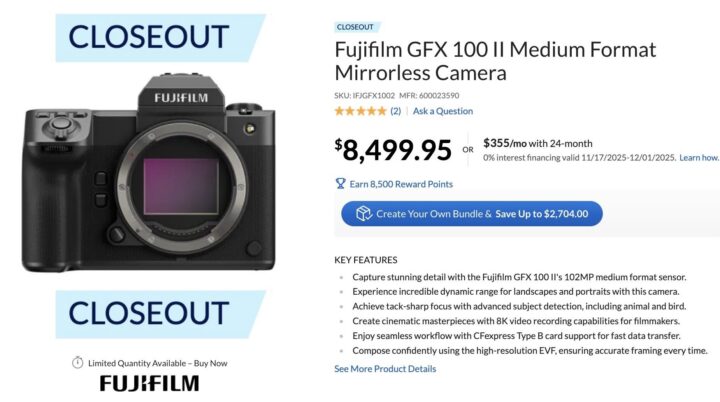
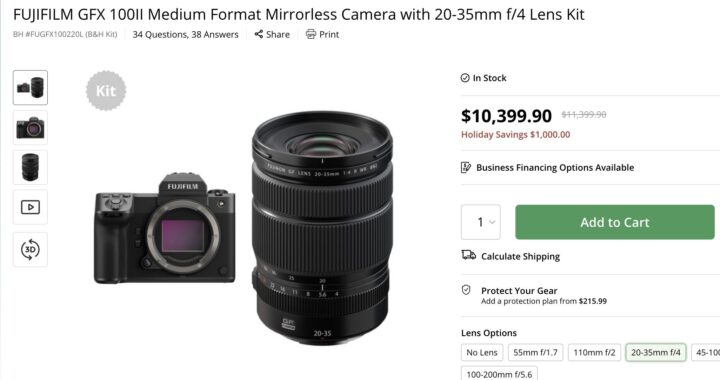
For this challenge, he chose just one camera: the Fujifilm GFX100 II—the camera he always turns to when he needs to capture a truly important image.
You can watch the video to see the clever techniques and setups his team used to overcome the challenges. The result is a portrait with a striking, almost painterly quality.
Of course Huge credits his team for the amazing results, but at some point he says:
full praise to my team […] because I think it looks like natural daylight thourghout and it also has a painterly feel to the photography.
Now, I warmly invite you to listen to the full podcast. But since I know many of you are particularly interested in what Hugo had to say about the Fujifilm GFX100 II in this context, I’ve extracted the key points below:
painterly feel in the image
fantastic dynamic range
great tonal gradation
if he’d have taken the image on a phone, it would be quite contrasty and harsher
it’s not about reproducing the image in big prints that he needs GFX, because even when reproduced small it has a greater quality intensity
the image was shot at ISO 3200
in a regular Canon he might risk shooting at ISO 800, and then he starts losing comfort
the Fujifilm GFX is amazing in low light
you can see the details of the king’s eyelashes in the image, even at ISO 3200
(Quick pause: some “smart” commenters will argue he used the wrong ISO and should have gone lower with flashes. I strongly suggest they actually watch the video before making that judgment)
the image looked like a painting by someone like Velázquez (personal note: I never thought I’d stand mesmerized in front of a painting for 15 minutes, but it happened to me in Madrid with Las Meninas of Velazquez… what a masterpiece)
And when Hugo saw the finished portrait of King Charles, he admitted that, for the first time, he felt intensely proud of his own work
(Another pause for the quick critics: some might say there is too much space above the king’s head. That’s intentional. There’s actually a rule in royal portraiture: you must leave enough room above the head to fit a crown.)
Editing?
no photoshop
Hugo explained that his adjustments were no different than what could have been done in the darkroom on a wet print
Finally, if you’d like to see this portrait (and others), Hugo has set up a dedicated website: crownportraits.co.uk.
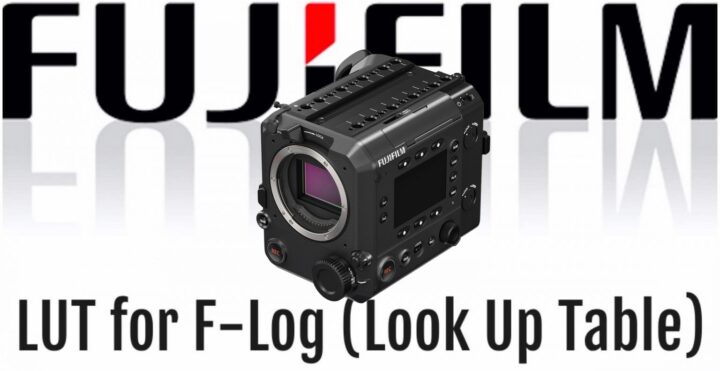
Well, if what we received is correct, then the final price should be $16,499 and it should ship in October.
That’s significantly more affordable than for example the Sony Burano 8K cine camera but on the other hand also more expensive than something like the Canon C400 6K cine camera (which does not shoot 8K though).
Our sources told us already last year that the Ricoh GR IV would come in 2025. Well, technically we told you it would come earlier in 2025, and in fact the Ricoh GRIV was disclosed a couple months ago already. But it was only a development announcement. The full announcement just happened yesterday. So yes, I still regard this as a wrong rumor (development announcement is not a full announcement), but at the same time I trust the source.
Well, at this point we remind you that according to the same source, Ricoh is also planing to launch the Ricoh GR IV monochrome. It was originally planed for 2025, but I would not be surprised if there would be a delay due to the huge pre-orders the GRIV is getting right now.
Fujifilm – Wake Up
Yes, the Ricoh GR IV is now here and it enjoys absolutely stellar pre-orders.
At this time Fujifilm has not really a camera to compete with the Ricoh GR IV, because the Fujifilm X100VI might share the fixed lens concept with it, but for the rest I think it appeals to other people: those who appreciate a viewfinder, tactile controls, vintage aesthetic, whereas the Ricoh GR IV is all about being as portable as possible.
The true competitor would be the Fujifilm X80, but Fujifilm has so far never bothered to give the Fujifilm X70 a second chance (the Fujifilm XF10 is not the X70 successor). And in my view that’s an error. The Ricoh GRIV proves that pocketable and powerful fixed lens cameras are enjoying a revival, and Fujifilm is missing out on it.
So, dear Fujifilm, come out with the Fujifilm X80 as quickly as you can!
And while it’s true that the Ricoh GRIV pre-orders are great, I dare to predict that the Ricoh GRIV M (Monochrome) will match or even exceed those pre-orders.
Look, initially I was skeptical about a Monochrome Fujifilm. But after I have seen how even the Pentax K-3 III monochrome DLSR sold like hot cakes (so much so that they had to suspend pre-orders as we reported here), I concluded that the market for monochrome cameras is far from being saturated.